
Dose Calculations and Intravenous drip rate
1. Units in Part A Numeracy
Dose calculations and intravenous (IV) drip-rate calculations are important areas of the NMC CBT numeracy exam. You should be able to calculate the correct amount of medication to administer and determine the appropriate IV infusion or drip rate from the information provided.
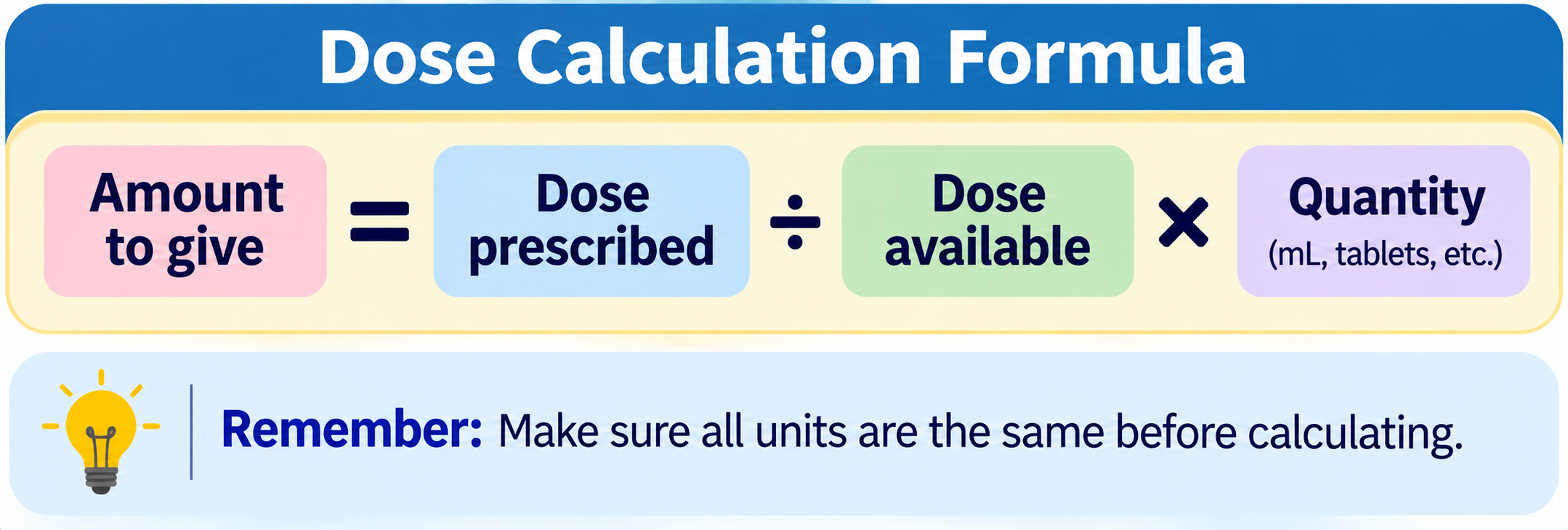
For dose calculations, a useful formula is:
Amount to give = (Dose prescribed ÷ Dose available) × Quantity
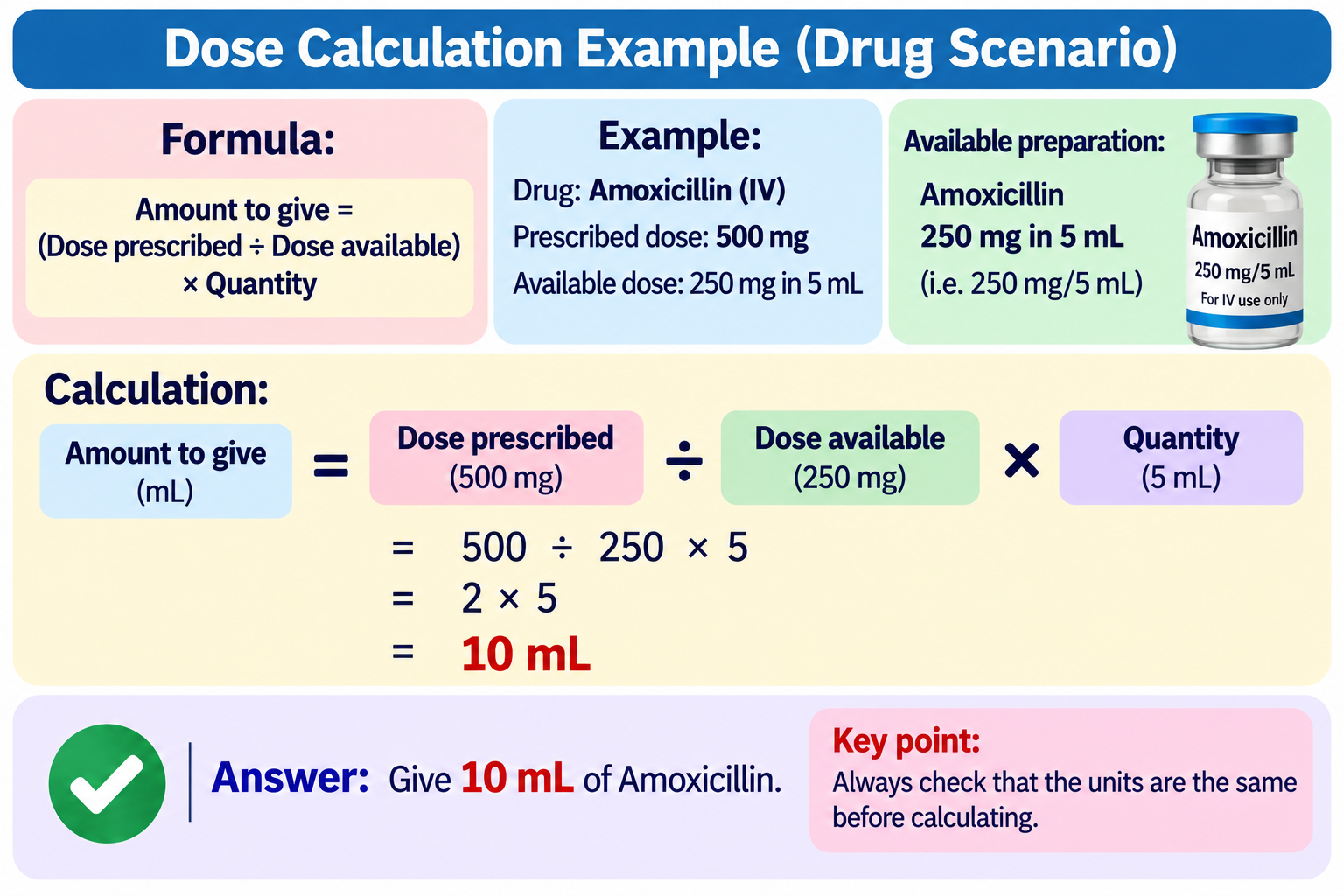
Example:
Mr Norman Prescribed 500 mg of Amoxicillin intravenous bolus; dose is available 250 mg in 5 mL. Please administer him correct dose
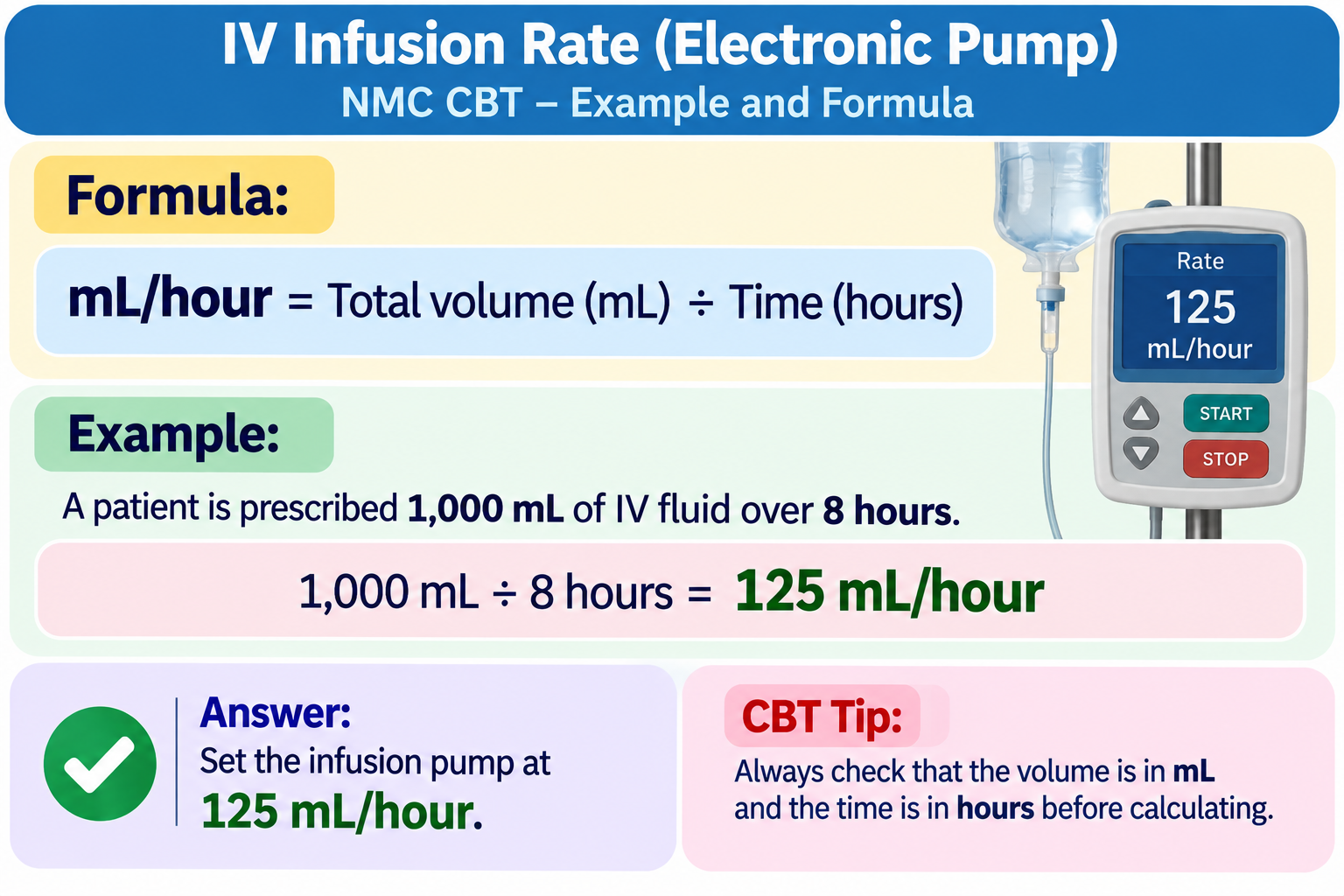
IV Infusion Rate – Electronic Pump (mL/hour)
For NMC CBT calculations involving an electronic infusion pump, use:
mL/hour = Total volume (mL) ÷ Time (hours)
Example
A patient is prescribed 1,000 mL of IV fluid over 8 hours.
1,000 mL ÷ 8 hours = 125 mL/hour
Answer: 125 mL/hour
IV Infusion with Gravity infusion set (Drops per Minutes)
IV drip rate calculations are an important part of the NMC CBT numeracy exam and help ensure that intravenous fluids are administered safely and at the correct rate. When an IV infusion is given by gravity, you may be asked to calculate the number of drops per minute using the total volume, infusion time, and the drop factor provided in the question. Always check the units carefully, convert hours to minutes when required, apply the correct formula, and round the final answer as instructed.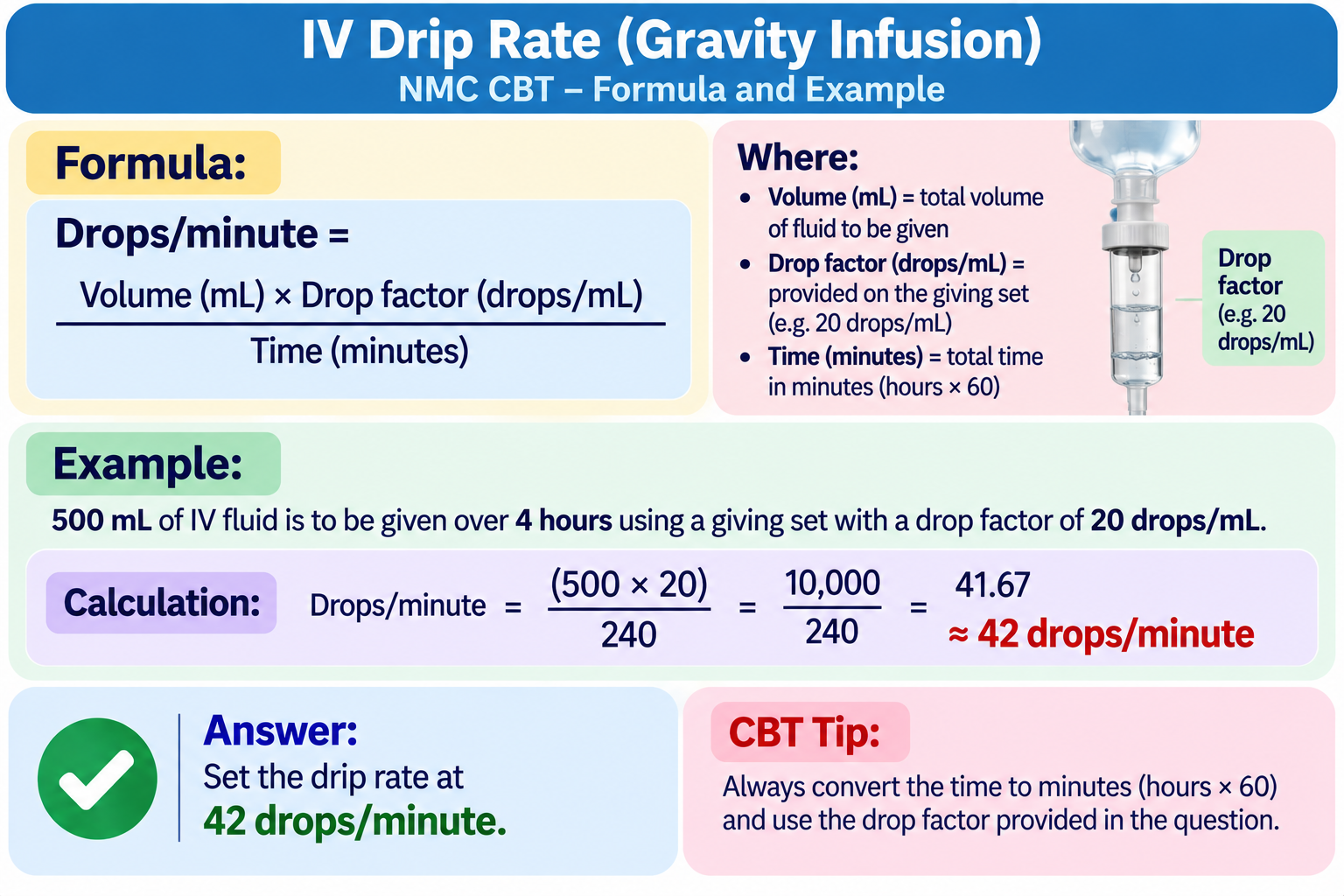
Setting an Infusion Rate in mg/hour
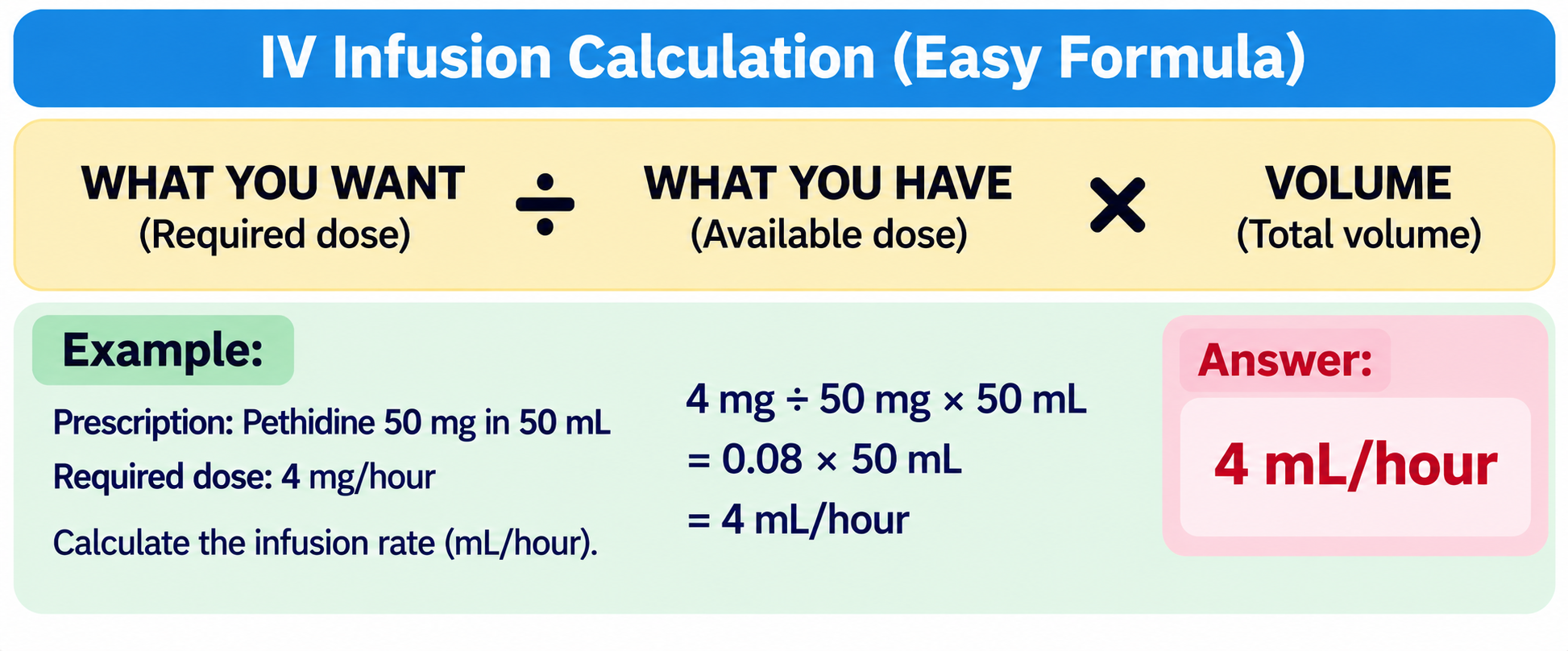
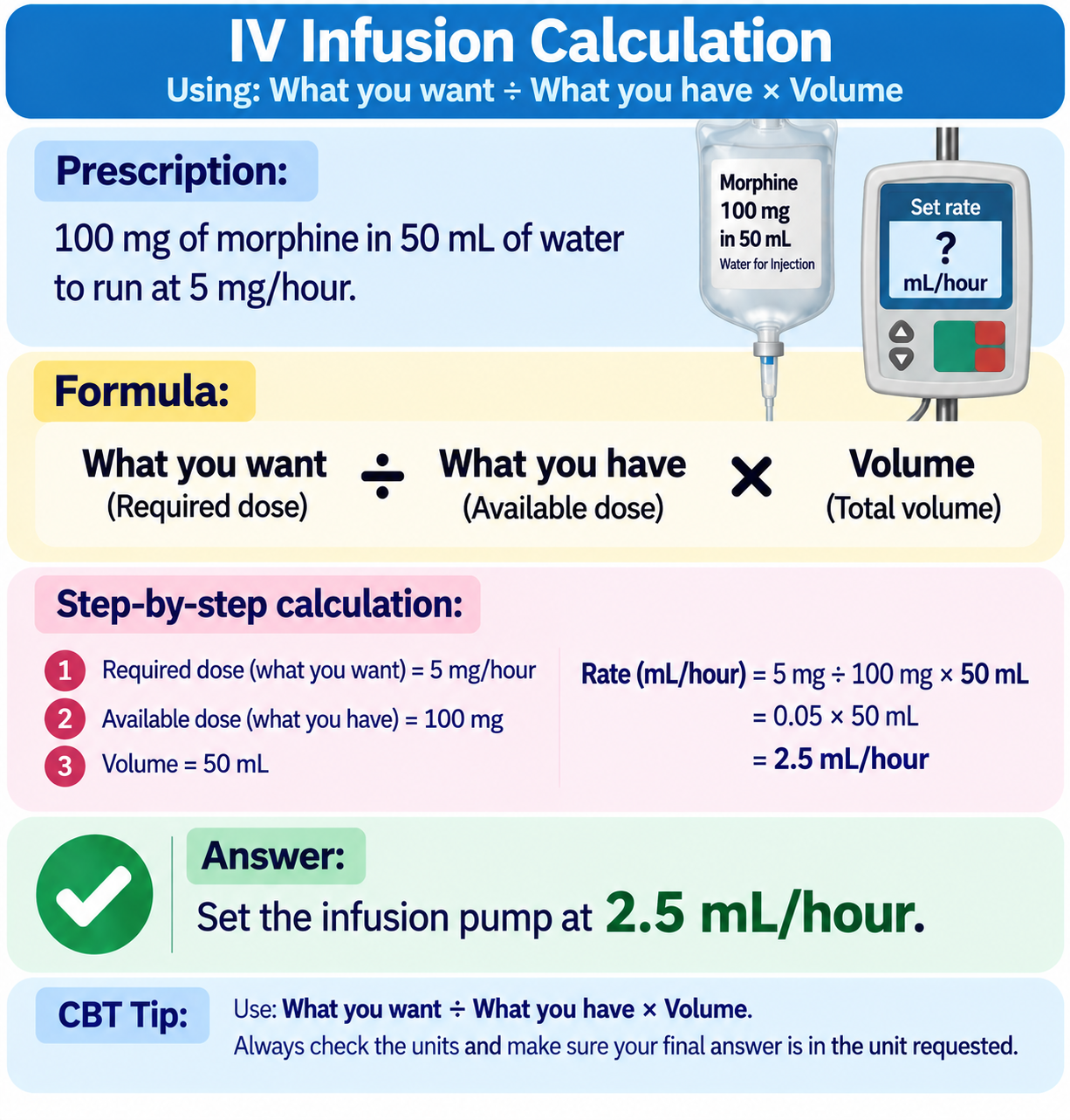
In the NMC CBT numeracy exam, you may be given an IV medication prescribed in mg/hour, while the infusion pump needs to be set in mL/hour. To calculate the correct pump rate, identify the dose required, the dose available, and the volume containing that dose. A simple formula to remember is: What you want ÷ What you have × Volume. Always check that the units are the same before calculating and ensure your final answer is expressed in the unit requested by the question.
A useful formula is:
WHAT YOU WANT ÷ WHAT YOU HAVE × VOLUME
Example-1,
Example-2,
Calculate dose with weight
Some medication doses are prescribed according to the patient’s body weight, usually in mg/kg or mcg/kg. To calculate the required dose, multiply the prescribed dose per kilogram by the patient’s weight.
Formula:
Required dose = Dose per kg × Patient’s weight (kg)
Example: A patient weighs 60 kg and is prescribed 5 mg/kg.
5 mg × 60 kg = 300 mg
Answer: 300 mg
Some medicines are prescribed according to a patient’s body weight or body surface area (BSA). Body weight is measured in kilograms (kg), so weight-based doses are commonly prescribed as mg/kg. Some medicines, particularly cytotoxic medicines, may be prescribed according to body surface area, measured in square metres (m²), with the dose expressed as mg/m².
The calculation follows the same simple principle:
Weight-based dose:
Required dose = Dose prescribed (mg/kg) × Weight (kg)
BSA-based dose:
Required dose = Dose prescribed (mg/m²) × BSA (m²)
Example 1 – Dose Based on Body Weight
A patient weighs 70 kg and is prescribed gentamicin 2 mg/kg. What dose should be administered?
Formula:
Required dose = Dose prescribed × Patient's weight
Calculation:
2 mg/kg × 70 kg = 140 mg
Answer: 140 mg
Example 2 – Dose Based on Body Surface Area
A patient has a body surface area of 1.6 m². A medication is prescribed at 50 mg/m². What dose should be administered?
Formula:
Required dose = Dose prescribed × Body surface area
Calculation:
50 mg/m² × 1.6 m² = 80 mg
Answer: 80 mg